Black Radio | The Voice of The People:
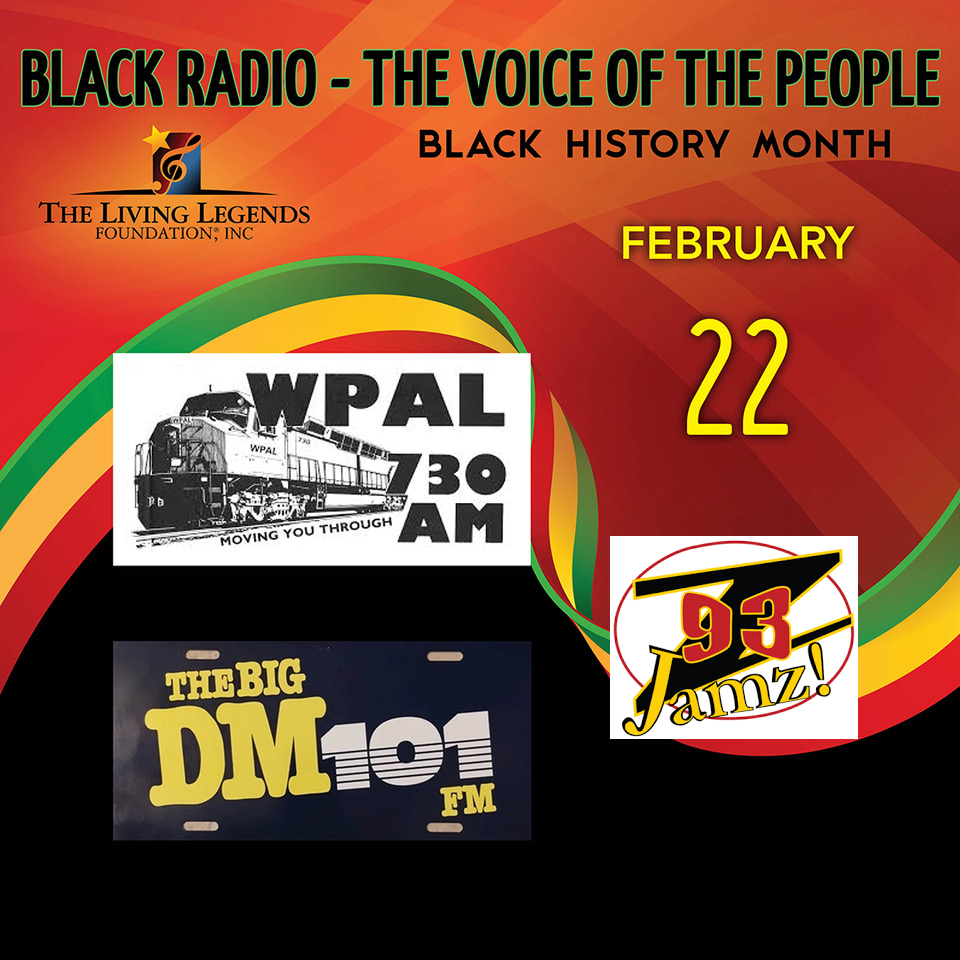
Today, the Living Legends Foundation celebrates South Carolina, paying tribute to the Black radio stations that helped define & elevate the culture.
WWDM 101.3 FM—branded today as “101.3 The Big DM”—has long been a cornerstone of Black radio in the Columbia market. Licensed to Sumter, the station signed on in 1961 as WFIG-FM, simulcasting the country format of its AM sister, WFIG 1290, with 3,000 watts.
A turning point came in 1973 when DJ Pete Boss introduced evening R&B programming. The response was immediate and overwhelming. By 1975, the format had expanded full-time, prompting a call letter change to WWDM. The momentum continued in 1976 when the station increased its power to 100,000 watts, dramatically extending its reach across central South Carolina. WWDM quickly became a trusted voice in the African American community, pairing music with award-winning news coverage and impactful public service programming.
During the 1980s, consultant Dean Landsman and program directors Andre Carson, Chris Connors and Kevin Fleming sharpened the station’s competitive edge and Toussaint “The Capricorn” was a popular air personality. WWDM frequently ranked #1 or #2 in Columbia, dominating the ratings with its blend of R&B, community engagement, and personality-driven radio. By the late 1990s, facing new competition, owner Inner City Broadcasting Corporation repositioned the station toward an Urban Adult Contemporary focus, targeting a more mature audience and acquiring rival WHXT to strengthen its footprint. Today, under Alpha Media ownership, The Big DM continues its legacy with syndicated staples like The Steve Harvey Morning Show and The D.L. Hughley Show, balancing national voices with local relevance.
Along the coast in Charleston, WPAL made history in 1948 as the city’s first station dedicated to African American listeners. Emerging after the sale and renaming of WFAK, WPAL became an essential cultural platform during the era of segregation. The station famously broadcast live from Mosquito Beach, a cherished recreational haven for Black Charlestonians in the 1950s and 1960s, capturing the music, joy, and resilience of a community creating space for itself.
In 1971, William “Bill” Saunders became part owner of WPAL, assuming full ownership in 1985. A respected broadcaster and civic leader, Saunders expanded the brand with WPAL-FM in 1994. Under his stewardship, WPAL was notably the first station back on the air after Hurricane Hugo in 1989, reinforcing its role as a lifeline for Charleston’s Black community.
In 1998, Clear Channel Communications, now iHeart Media, acquired WPAL, and over time the station cycled through formats including news/talk, adult standards, Spanish-language programming, gospel, and Catholic talk. The original WPAL-AM eventually became WLTQ and later went dark or was repurposed, while WPAL-FM transitioned to WAYA-FM, now operating as a contemporary Christian station. Though the call letters have faded locally, WPAL’s cultural imprint remains significant.
Today, Charleston’s urban contemporary energy is carried forward by WWWZ 93.3 FM, known as Z-93 Jamz. Serving the Charleston metropolitan area and the broader Lowcountry, the station broadcasts hip-hop and R&B under Cumulus Media ownership. WWWZ signed on May 10, 1974, as “3WZ,” initially featuring a freeform progressive rock format broadcast from a modest mobile home studio. By 1981, recognizing shifting audience tastes, the station pivoted to a rhythmic contemporary “Churban” format—blending contemporary hits with R&B and dance influences. Today, Z-93 Jamz maintains its competitive edge with nationally syndicated The Breakfast Club in morning drive and strong local personalities such as Deja Dee and DJ D-Nyce.
If you have memories of these or other stations in South Carolina, please add them in the comments.
#VoiceOfThePeople #BlackHistory #LivingLegends #BlackRadio #LLF #BlackHistoryMonth