Black Radio | The Voice of The People:
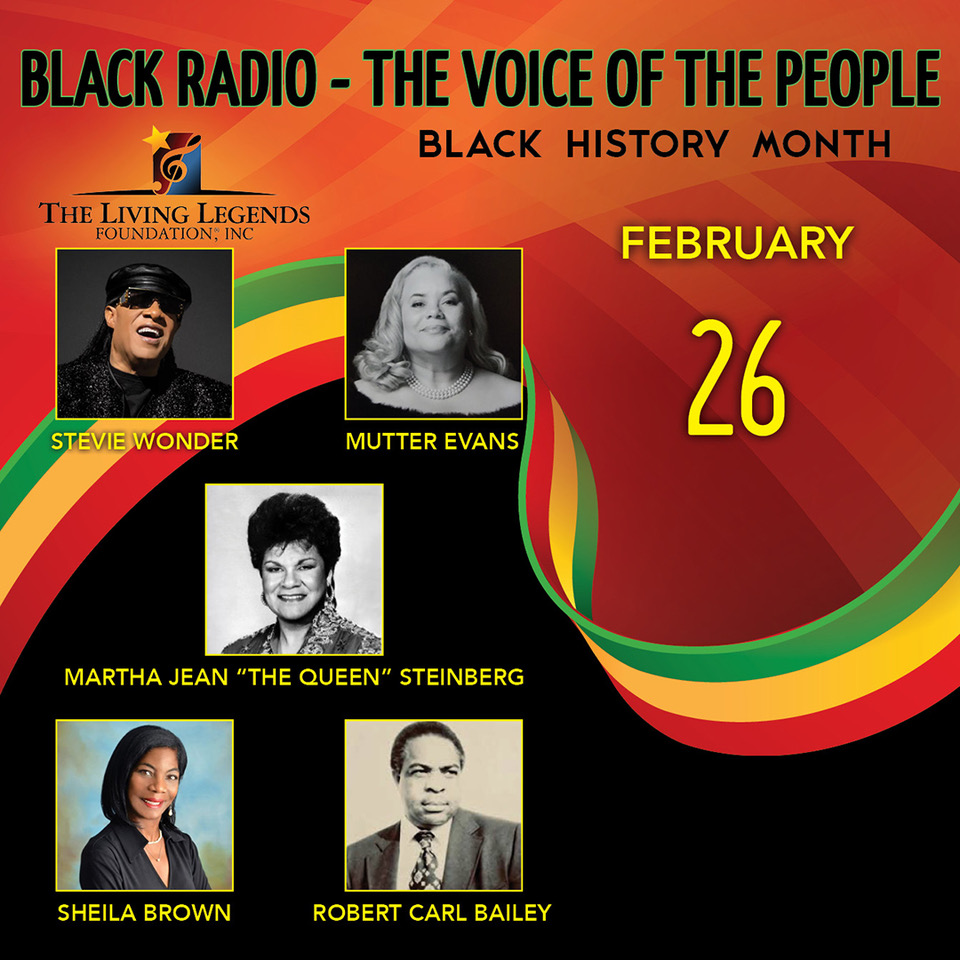
Today, the Living Legends Foundation pays tribute to the Black radio station owners who helped define & elevate the culture. This is part 4 of 6.
Known on air as Radio Free 102.3 FM, KJLH has been a cornerstone of Los Angeles radio since its debut in 1965. The station was originally launched by John Lamar Hill, owner of Angelus Funeral Home, with a mission to serve the city’s Black community through music and public affairs programming.
In 1979, global music icon Stevie Wonder purchased the station, ushering in a new era of growth and cultural influence. Under his Taxi Productions banner, Wonder embedded the station’s call letters into its enduring slogan: “Kindness, Joy, Love and Happiness.” KJLH’s format — a blend of R&B, Classic Soul, Hip Hop, Gospel, and Smooth Jazz — reflects the rich musical traditions of its audience. Beyond music, the station has remained deeply involved in community events, voter engagement efforts, and local initiatives throughout Southern California.
When WAAA signed on the air in 1950, it made history as the first Black-programmed radio station in North Carolina with an all-Black format. The
station quickly became a cultural lifeline for listeners in Winston-Salem and surrounding communities.
In 1979, at just 26 years old, Mutter Evans purchased WAAA, becoming the youngest Black woman — and only the second Black woman overall — to own a radio station at the time. Her leadership marked a significant milestone in both broadcasting and women’s entrepreneurship.
An influential broadcaster who later became a pastor, Martha Jean “The Queen” Steinberg began her radio career in 1954 at WDIA in Memphis — one of the first stations in the nation programmed entirely for Black audiences.
After relocating to Detroit in 1963, she gained prominence on WCHB and later WJLB, where her commanding voice and spiritual presence made her one of the city’s most beloved media figures.
In 1982, Steinberg purchased WMZK and changed its call letters to WQBH, transforming it into a gospel powerhouse. Her influence extended beyond radio; she was inducted into the R&B Hall of Fame and, in 1998, into the Michigan Women’s Hall of Fame — affirming her status as both a cultural and spiritual leader.
Sheila Brown’s journey in broadcasting is a testament to perseverance and vision. Beginning in 1986 as an entry-level sales employee at WUFO in Buffalo, she steadily rose through the ranks to become CEO.
In 2013, she fulfilled her dream of ownership by purchasing WUFO, establishing Vision Multi Media Group and securing the station’s future as a
community-focused voice. Brown later expanded her footprint by acquiring WIGO Pacesetter 1570 AM in Atlanta, reinforcing her commitment to preserving and strengthening Black-owned media platforms.
In northwest Alabama, WZZA — proudly branded as the “Soul of the Shoals” — stands as a powerful example of enduring family ownership in Black radio. Robert “Bob” Carl Bailey and his wife Odessa purchased the station in 1977, making it a cornerstone of Muscle Shoals Broadcasting.
Following Mr. Bailey’s passing in 2001, his daughter Tori Bailey assumed the role of general manager, continuing the family legacy.
Today, WZZA remains the only Black-owned radio station serving northwest Alabama — a lasting testament to the Bailey family’s dedication
to community voice, cultural preservation, and independent ownership.
Together, these stations and leaders illustrate the transformative power of Black radio ownership — institutions built not merely to broadcast music,
but to inform, uplift, and sustain the communities they serve.
These leaders carved out platforms that amplified Black voices and built institutions designed to endure.
If you have memories of these leaders, please add them in the comments.
#VoiceOfThePeople #BlackHistory