
Black Radio | The Voice of The People:
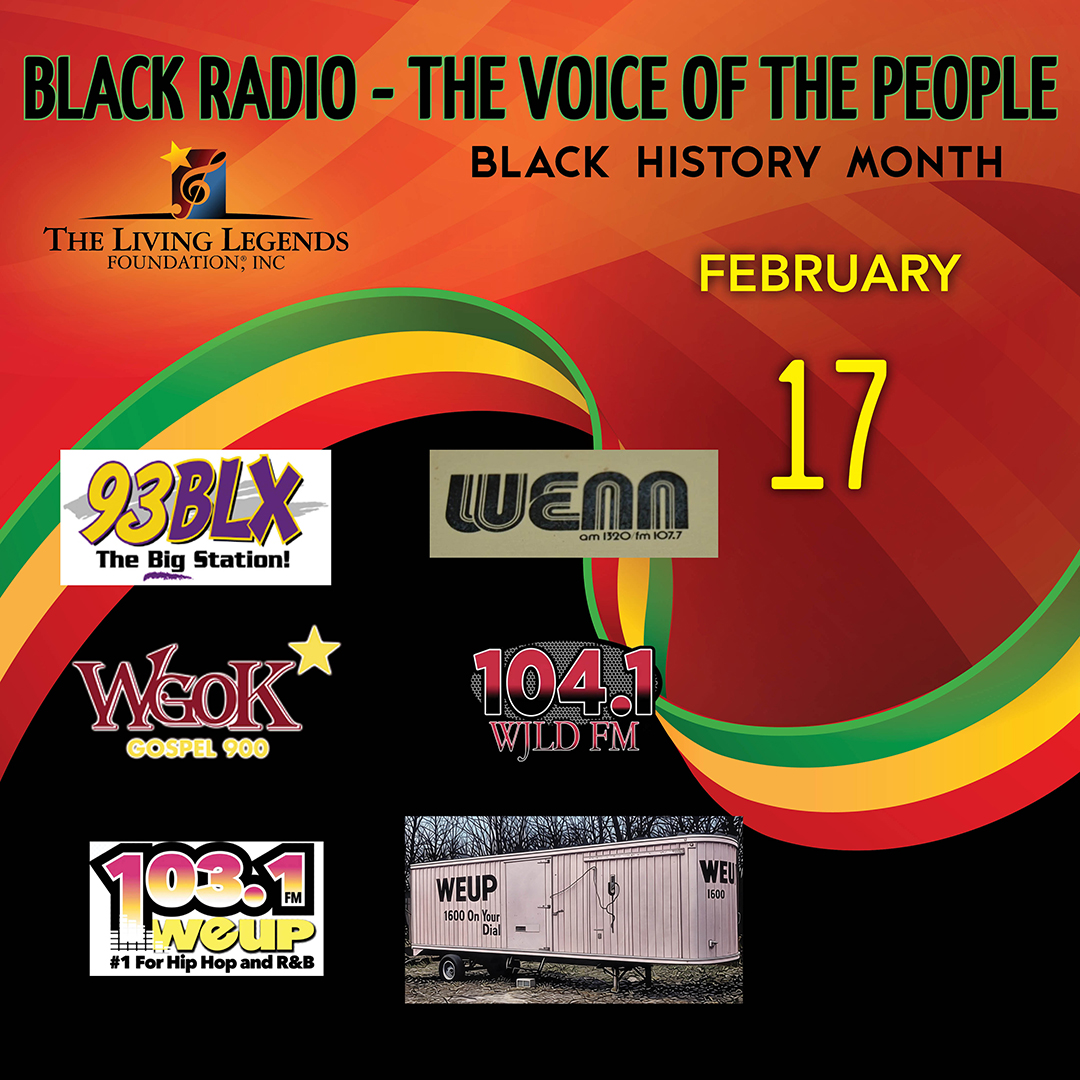
Today, the Living Legends Foundation celebrates Alabama, paying tribute to the Black radio stations that helped define & elevate the culture.
Alabama’s Black radio history runs through Birmingham, Huntsville, and Mobile—cities where the microphone became more than a tool of entertainment. It became a lifeline.
In Birmingham, WJLD signed on in the early 1940s and, by the 1950s, shifted to programming aimed squarely at Black listeners. Its blend of gospel, blues, R&B, and talk quickly made it one of the city’s earliest and most enduring Black-formatted stations. But WJLD was more than music. During the Civil Rights Movement, it became known for activist radio—giving airtime to local leaders, promoting mass meetings and marches, and broadcasting church and community programming when mainstream outlets often refused.
From the 1930s through the 1980s, Birmingham’s Black radio stations were far more than entertainment outlets. They were information hubs, cultural anchors, and trusted messengers. Stations such as WJLD, WENN, WATV, WAGG, and WVUL delivered news when newspapers would not, music when venues were closed, and connection when communities were under pressure. Gospel, R&B, soul, sports, church announcements, and civil rights updates flowed through these airwaves, binding neighborhoods together in real time.
During the Civil Rights Era, DJs were not simply personalities—they were leaders. Shelley “The Playboy” Stewart, Maurice “Thin Man” King, Jesse Champion, and others used radio to inform, unite, and sometimes protect their communities, often at great personal risk. Their voices carried strategy, encouragement, and urgency. This wasn’t just broadcasting. It was culture, resistance, and community unfolding live on the dial.
In Huntsville, WEUP 1600 made state history in 1958 as Alabama’s first Black-owned and Black-operated radio station. Founded by Leroy and Viola Garrett, WEUP began broadcasting from a trailer on church grounds, filling the air with gospel, sermons, local news, and rhythm and blues. The Garretts would later help change federal regulations to allow 24-hour broadcasting for stations in their class. When Mrs. Garrett decided to sell the station in 1987, another successful Black husband and wife team, Hundley Batts, Sr. and Dr. Virginia Caples, took the reins of ownership and operation of WEUP. pat
Along the Gulf Coast, Mobile’s WBLX—known as 93BLX—emerged as a dominant urban FM powerhouse. With its strong regional signal, long-running personalities, and high-profile mix shows, WBLX shaped contemporary R&B and hip-hop listening for Black audiences across Mobile, Pensacola, and surrounding communities. For many listeners, it was the soundtrack of daily life.
Gospel radio also found a commanding presence at WGOK, home to one of the nation’s earliest Black female DJs, Irene Johnson Ware. Over a remarkable 37-year career at the station, she hosted “The Mandy Show,” rose to become general manager, and wrote for major music trade publications including Black Radio Exclusive (BRE) and Record World. Her leadership on and off the air expanded opportunities for women in Black radio and helped define the industry’s professional standards.
In 1996, WBHJ reintroduced itself to Birmingham as 95.7 Jamz, embracing a urban contemporary format. Under the leadership of PD Mickey Johnson, the station quickly rose to the top of the ratings, becoming a cultural hub for Birmingham’s young, urban audience. A key force behind its influence was DJ Katrina “Mz Katt” Holman—known on air as “The Dirty South Diva.” She built a reputation for championing local and independent artists, giving them valuable airplay and creating networking opportunities that helped cultivate Birmingham’s hip-hop and R&B scene. Another notable voice was Ebony Arrington Steele, who spent years as a WBHJ DJ before going on to earn national recognition in both radio and comedy. Today, WBHJ continues its legacy of high-energy programming with the nationally syndicated morning show The Morning Hustle, featuring Headkrack, Angie Ange, Billy Sorrells, and Lore’l.
Across town, WBHK 98.7 Kiss-FM—branded as “Birmingham’s Kiss”—was launched by former WRKS New York Production Director Jay Dixon. As an urban adult contemporary station, Kiss-FM carved out its own identity by blending syndicated favorites with strong local programming. The station has remained deeply engaged in Birmingham’s Black cultural and civic life through community promotions, event sponsorships, and outreach initiatives. Its late-night R&B and slow jams program, The Night Kiss, has become a listener favorite, providing the perfect soundtrack for adults winding down at the end of the day.
If you have memories of these or other stations in Alabama, please add them in the comments.
#VoiceOfThePeople #BlackHistory #LivingLegends #BlackRadio #LLF #BlackHistoryMonth